


We have published a simulation tool to optimize the use of geothermal energy in district heating and cooling networks
We have published GeoDENs, a dynamic simulation tool for studying how district heating and cooling networks using shallow geothermal energy operate. Being able to test different configurations and operating strategies makes it possible to evaluate design alternatives before implementing them and to choose the most suitable solution in terms of energy efficiency, economic cost and emissions. We have released the tool as open source so that any professional who needs it can use it.
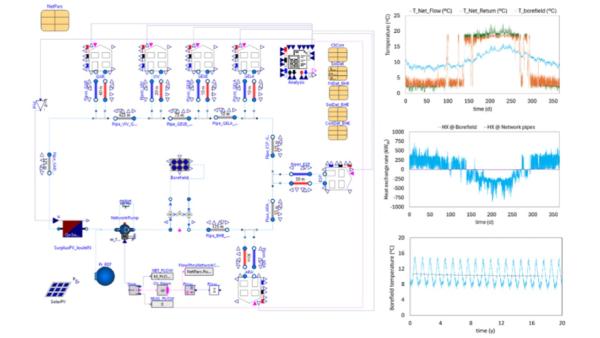
Graphical interface of a simulation model of a fifth-generation heating and cooling network using the GeoDENS library, and the corresponding results showing the temporal evolution of temperatures and heat flows in the system.
Fifth-generation district heating and cooling networks (5GDHC) are considered one of the alternatives with the greatest potential to decarbonize the heating and cooling demand of neighborhoods, towns and cities. They are based on the efficient exchange of energy between buildings and on the integration of local renewable resources such as geothermal energy, and they make it possible to reduce energy consumption, emissions and dependence on fossil fuels. Connecting multiple users to a shared infrastructure makes them an efficient and scalable solution for advancing the energy transition in municipalities.
GeoDENs is part of the European project FlexGeo, led by the Technical University of Munich (TUM), which develops methodologies, tools and technical knowledge to facilitate the adoption of geothermal solutions and contribute to a more flexible energy system. The tool is a library of components implemented in Modelica and validated with OpenModelica. The publication corresponds to deliverable D3.1 of the project and reinforces our commitment to open science and technology transfer.
The Vielha case study
GeoDENs includes as a case study the future heating and cooling network of Vielha, promoted by the Conselh Generau d’Aran as part of the project “Vielha Smart Multi-RES micro DHC grid”. The model is based on the executive design of a network intended to supply renewable thermal energy to the Palai de Gèu (ice rink), the Palai d’Esports (sports center), the primary school and other public and private buildings in the municipality.
Access to the code and download: Zenodo - FlexGeo D3.1
More information: FlexGeo Project - ICGC